
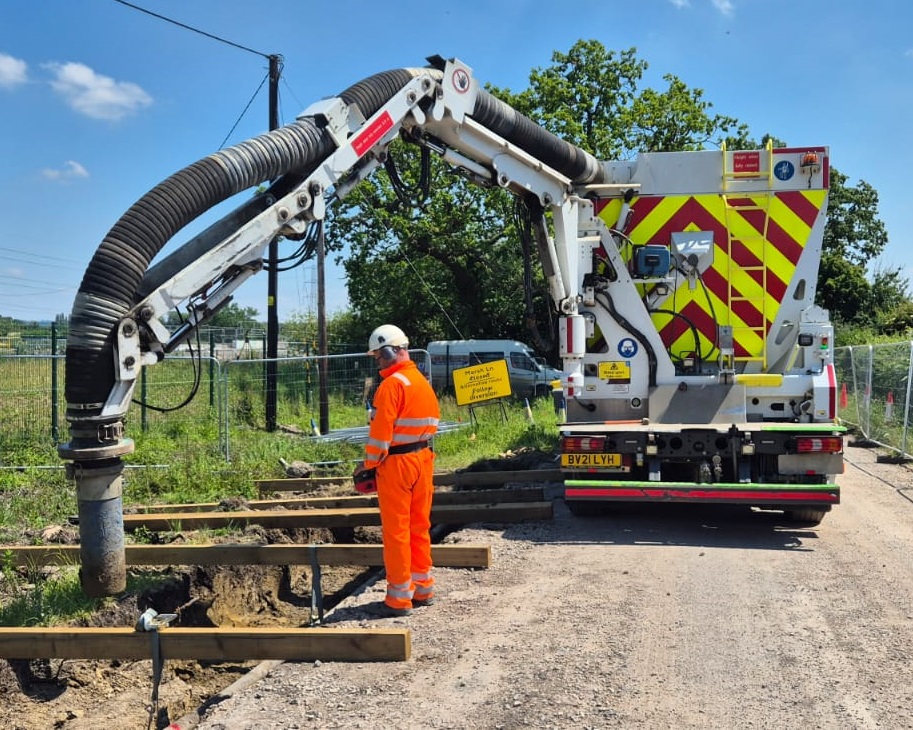
TL;DR: Non-Destructive Digging (NDD) uses pressurised water and a vacuum system to safely expose underground utilities without damaging them. Compared to traditional excavation methods, NDD prevents costly utility strikes, reduces project delays, lowers crew requirements, and generates up to 60% less waste — making it a smarter and safer choice for most construction and infrastructure projects.
Ever started a project with the best of intentions, only to have it blow up the moment someone’s backhoe clips a gas line? Yeah. That kind of day is exactly what Non-Destructive Digging (NDD) is designed to prevent.
NDD — also known as hydro excavation, vacuum excavation, or soft digging — has quietly become one of the most important tools in the construction and infrastructure world. It’s not flashy. There are no robots or AI involved. It’s just smart, precise digging that avoids the kind of chaos that sends project budgets into freefall.
This post breaks down exactly how NDD works, why it saves time and money, and when you should seriously consider using it on your next job. No technical jargon. No fluff. Just the good stuff.
What’s the Big Deal with Digging, Anyway?
Here’s the thing about digging: the ground is full of stuff. Gas lines, water mains, fibre optic cables, sewer pipes, electrical conduits. In older suburbs and dense urban areas, these utilities are often crammed into tight underground corridors with little room to breathe. And their exact locations? Sometimes not documented all that well.
Traditional excavation methods — backhoes, trenchers, jackhammers — are powerful, but they’re blunt instruments. They move a lot of material fast, which sounds great until something goes wrong.
And things go wrong a lot. According to research cited by Black Hydrovac (January 2025), the United States experiences between 400,000 and 800,000 utility strikes every year. That’s roughly one to two strikes every single minute. In Australia, underground utility damage is similarly widespread, with congested urban infrastructure increasing the risk on virtually every dig site.
Meet Sarah. Sarah’s a project manager on a residential subdivision in outer Brisbane. Her team gets three weeks into the job — foundations are forming, schedules are tight — and then a backhoe clips an unmarked water main. Boom. Work stops. Emergency crews come in. The affected residents lose water for eight hours. Repairs eat up two weeks of buffer time and tens of thousands in unplanned costs. The developer is furious. Sarah’s fielding calls at midnight.
That scenario isn’t hypothetical in spirit — it plays out constantly on job sites across the country. The good news? Most of it is avoidable. According to the Common Ground Alliance’s 2021 DIRT Report, 76% of utility strikes can be prevented with the right precautions.
NDD is one of the biggest precautions you can take.
What Exactly is Non-Destructive Digging?
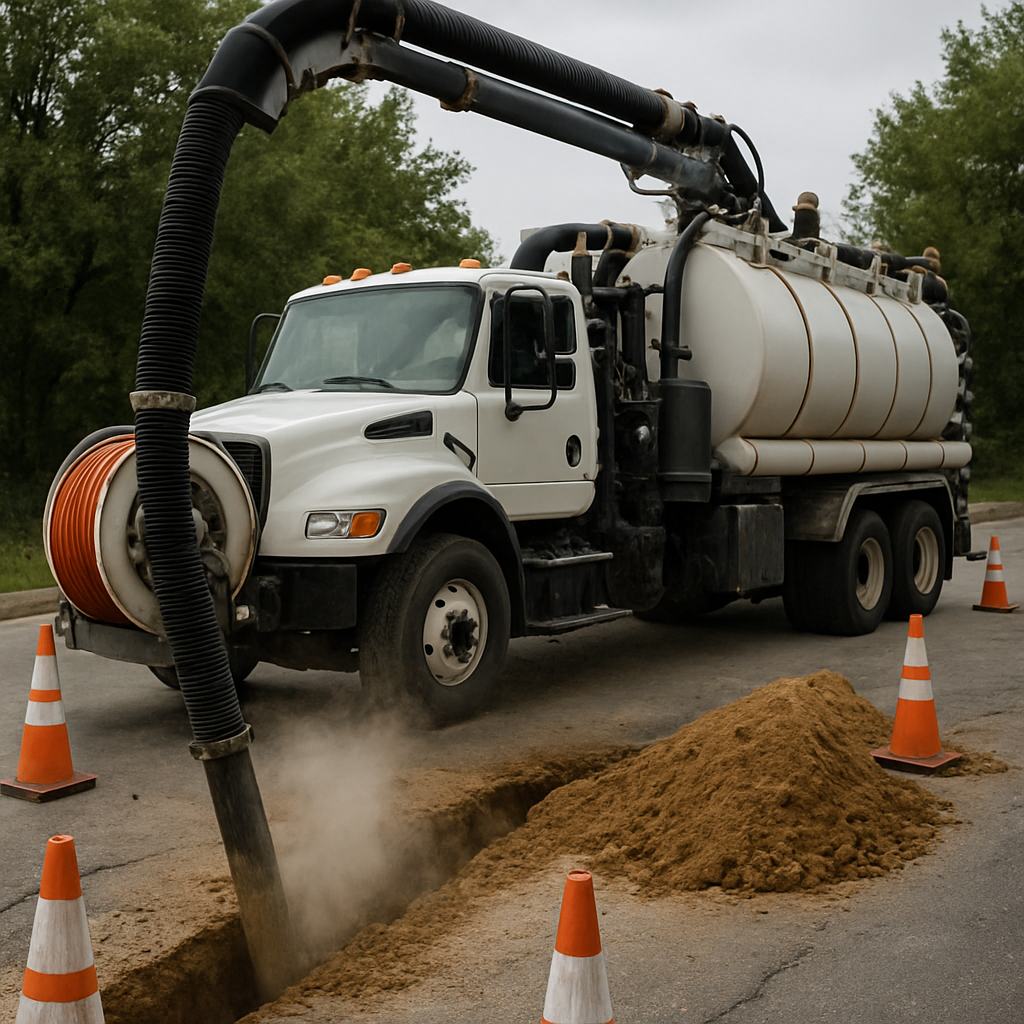
Here’s the simple version: NDD breaks up soil using high-pressure water or air, then sucks the loosened material into a holding tank on a vacuum truck. That’s it. No brute force. No guessing. No swinging a steel bucket near a gas main and hoping for the best.
The process has three main steps:
- Pressurised water injection — A controlled water jet is aimed at the area to be excavated, breaking up soil without making contact with any buried infrastructure.
- Vacuum extraction — A high-powered suction hose pulls the loosened soil and slurry into a debris tank on the hydrovac truck.
- Disposal or reuse — The excavated material is either carted away or, where suitable, placed back into the hole once the job’s done.
One machine does all of this. Compare that to traditional excavation, which often requires a drill to break up ground, an excavator to remove it, and a separate truck to haul it away. NDD simplifies the whole operation.
The precision is what sets it apart. Operators stand directly over the excavation and can make real-time adjustments. They see exactly what they’re exposing as the soil clears — no blind guesswork, no white-knuckling it near sensitive infrastructure.
Think of it like surgery for the ground. A scalpel instead of an axe.
How NDD Keeps Projects Moving
Delays on construction projects are rarely caused by just one thing. They compound. A utility strike causes a stoppage, which triggers inspections, which require permit reviews, which push back the whole schedule. Before you know it, a two-day setback becomes a two-month nightmare.
NDD interrupts that chain reaction at the very beginning.
How does NDD help identify underground utilities before digging?
One of the most common uses for NDD is potholing — digging small test holes to verify the exact location, depth, and orientation of underground utilities before major excavation begins. This is sometimes called “daylighting,” because you’re essentially bringing buried infrastructure to the surface (well, into view) without disturbing it.
The accuracy here is significant. Unlike using a backhoe and hoping the utility plans are correct, potholing with NDD gives you eyes on the actual pipe or cable. You know exactly what’s there and where it sits. That means your excavation plan can be adjusted before something goes wrong — not after.
Now picture John. John’s a project manager on a fibre optic rollout through a dense inner-city neighbourhood. The utility plans are fifteen years old and not exactly reliable. Instead of sending in a trencher and crossing his fingers, John’s team uses NDD to pothole along the route first. They discover two water mains and a gas line that weren’t accurately mapped. They adjust the route slightly, update the documentation, and the project continues without a single strike. No delays. No emergency crews. No awkward calls to the client.
That’s not luck — that’s just what happens when you use the right tool.
Does NDD reduce the need for rework and site reinstatement?
Absolutely. Traditional excavation tends to disturb a larger area than necessary. Surrounding footpaths, roads, gardens, and even nearby building foundations can be affected by vibration and ground collapse. All of that has to be fixed. That reinstatement work takes time and costs money.
NDD excavates only the area required. The footprint is smaller, the surrounding environment is less disturbed, and cleanup is faster. According to Bess Utility Solutions (November 2025), hydrovac generates approximately 60% less waste than standard excavation methods. Less mess means less time and money spent putting things back the way they were.
Keeping Those Unexpected Costs Under Control
Let’s talk numbers for a second, because they’re pretty eye-opening.
According to research cited by Black Hydrovac, each utility strike costs an average of $4,000 in direct damage. But that’s just the start. Bess Utility Solutions references broader research showing direct costs per incident reaching $56,000 — and that still doesn’t capture the full picture. The 2019 DIRT Report from the Common Ground Alliance found that the ratio of indirect and social costs to direct repair costs is 29:1. So a strike that costs $4,000 to fix directly could generate $116,000 in downstream costs through delays, legal exposure, customer complaints, and reputational damage.
And a single strike can halt work for two to three months. That’s not a small bump. That’s a derailment.
Enter Emily. Emily’s company is laying a new gas pipeline through a suburban corridor. The job involves working near a tangle of existing utilities in a narrow easement. Her team decides to use NDD for the entire excavation. The upfront hourly rate is higher than a backhoe hire. But they complete the job without a single utility strike, zero downtime, and well within budget. Emily runs the numbers afterwards: the cost of one avoided strike — factoring in delays, repair costs, and potential fines — would’ve far exceeded the price difference between NDD and traditional methods. She’s a convert.
Does NDD have any insurance benefits?
Yes, though this one’s often overlooked. Fewer utility strikes and better safety outcomes mean lower risk profiles for contractors. Bess Utility Solutions highlights that hydrovac use contributes to stable insurance premiums, reduced OSHA fines, and lower legal exposure. Over time, fewer incidents means fewer claims, which means less pressure on premiums. It’s a slow-burn benefit, but a real one.
Beyond Time and Money: The Other Perks Worth Knowing
How does NDD protect workers and the public?
It’s significantly safer than traditional digging. Vacuum excavation causes just 0.2% of utility damages, compared to 53% attributed to mechanical excavation — making NDD roughly 250 times safer than a backhoe (Bess Utility Solutions, 2025). The boom arms and hydraulic equipment also reduce the amount of manual handling required from workers. In some cases, machinery can be operated remotely, keeping crew members at a safe distance from live utilities.
Since 2000, utility strikes in the U.S. have caused more than 400 fatalities and over 2,000 injuries (Black Hydrovac, 2025). Those are real people with real consequences. Safer excavation methods directly reduce that toll.
What’s the environmental impact of NDD compared to traditional excavation?
Traditional excavation can cause soil erosion, sediment runoff into stormwater systems, and significant disturbance to local ecosystems. NDD limits all of that. Because only a small section of earth is excavated at a time, surrounding soil, root systems, and ground cover stay intact. There’s no heavy machinery compressing or tearing up the surrounding land.
The contained slurry system also means excavated material doesn’t just get scattered around — it goes directly into the debris tank. No runoff. No contamination of nearby waterways. Cleaner worksite, cleaner result.
Does NDD work in frozen or difficult ground conditions?
Yes. Many hydrovac trucks carry onboard heating systems that warm the water before injection, allowing effective excavation even in frozen ground — a significant advantage in colder climates during winter months where traditional mechanical methods really struggle.
When Should You Use NDD?
NDD is ideal for:
- Utility potholing and verification — Confirming locations before major excavation
- Trenching near existing infrastructure — Gas, water, telecoms, power
- Pipe and cable installation or repair — Especially in congested corridors
- Environmental and geotechnical investigations — Soil sampling without cross-contamination
- Tree root protection — Where digging near vegetation requires a delicate touch
- Densely populated urban areas — Where vibration and collateral damage to nearby structures is a concern
- Municipal stormwater and sewer maintenance
- Oil and gas pipeline exposure and repair
Is NDD always the right call?
Honestly, not always. In open paddocks or greenfield sites with no underground infrastructure, bringing in a backhoe is faster and more cost-effective. NDD shines when there’s uncertainty about what’s underground, when the consequences of a utility strike are serious, or when precision is non-negotiable.
Rocky terrain can also reduce NDD’s efficiency, and wet or muddy conditions make slurry management more complex. That said, a skilled operator can adjust pressure and technique to handle most conditions effectively.
The question to ask yourself is: what’s the cost of getting this wrong? The higher that cost, the more NDD makes sense.
Choosing the Right NDD Partner
Not all NDD operators are equal. Equipment varies. Experience varies. And on a job where precision actually matters, the skill of the crew is just as important as the technology they’re using.
A few things to look for:
- Experience on similar projects — Have they worked in congested urban corridors? On similar utility types? Ask for case studies or references.
- Up-to-date, well-maintained equipment — Older or poorly maintained trucks can reduce accuracy and reliability.
- Trained and certified operators — Look for operators with documented training on equipment operation, safety procedures, and emergency response.
- Clear safety protocols — Do they complete a Job Safety Analysis before each job? Do they call in utility locates beforehand?
- Reputation and track record — Online reviews and industry word-of-mouth go a long way.
Don’t just pick whoever’s cheapest. On a job where a mistake could cost you six figures in delays and repairs, the hourly rate difference between a quality operator and a cut-rate one is basically noise.
Your Project’s New Best Friend
Here’s the bottom line: Non-Destructive Digging isn’t a niche technology for special occasions. It’s a genuinely smarter way to approach excavation — particularly when you’re working near existing underground infrastructure.
The numbers back it up. With utility strikes costing billions annually, causing hundreds of deaths, and derailing project timelines by months at a time, the case for a safer, more precise method is pretty hard to argue against. NDD reduces strike risk dramatically, speeds up excavation, cuts waste, protects workers, and keeps insurance and liability costs in check.
So the next time you’re planning a dig — whether it’s a straightforward pipe repair or a full-scale infrastructure rollout — it’s worth asking: is this the right situation for NDD? Chances are, it is.
Do yourself a favour and at least have the conversation with a qualified NDD operator before you reach for the backhoe.
Frequently Asked Questions About Non-Destructive Digging
What is Non-Destructive Digging and how does it work?
Non-Destructive Digging (NDD) is an excavation method that uses pressurised water to break up soil and a high-powered vacuum to remove the loosened material into a debris tank. It’s also known as hydro excavation, vacuum excavation, or soft digging. The process exposes underground utilities safely without making forceful contact with buried pipes, cables, or conduits.
How does NDD prevent project delays?
NDD prevents delays primarily by avoiding utility strikes — the leading cause of construction stoppages. By using potholing to confirm the exact location and depth of underground utilities before full excavation begins, NDD eliminates the guesswork that leads to accidental strikes. Fewer strikes means fewer emergency repairs, fewer work stoppages, and fewer permit complications.
Is Non-Destructive Digging more expensive than traditional excavation?
NDD typically carries a higher hourly rate than mechanical excavation. However, when you factor in the cost of a single utility strike — which can average $4,000 in direct damages and up to 29 times that figure in indirect costs — NDD frequently delivers a lower total project cost. According to Bess Utility Solutions (2025), the return on investment turns positive at just a 1% strike probability.
What types of projects benefit most from NDD?
NDD is most valuable for projects near existing underground infrastructure: utility installation and repair, trenching in congested corridors, stormwater and sewer maintenance, telecommunications rollouts, and oil and gas pipeline work. It’s also preferred in densely populated urban areas, near tree root systems, and in any situation where collateral damage to surrounding structures or the environment is a concern.
Can NDD be used in frozen or difficult ground conditions?
Yes. Many hydrovac trucks are equipped with onboard water heaters that enable effective excavation in frozen ground — a significant advantage during winter months or in colder climates. Rocky terrain can reduce efficiency, but experienced operators can adjust water pressure and technique to handle most soil conditions.
How much safer is NDD compared to using a backhoe?
According to Bess Utility Solutions (2025), vacuum excavation causes just 0.2% of utility damages compared to 53% attributed to mechanical excavation — making NDD approximately 250 times safer than a backhoe. The 2021 DIRT Report also found that backhoes were the leading type of equipment responsible for utility strike damage, accounting for nearly 50% of all incidents.
Does using NDD have any impact on insurance premiums?
Indirectly, yes. Contractors with fewer utility strikes and stronger safety records typically face lower risk profiles, which can contribute to stable or reduced insurance premiums over time. NDD also reduces exposure to OSHA fines and legal liability — both of which factor into a business’s overall insurance and risk position.


Leave a Reply