
You’re ready to book a dig, but one question keeps circling: what’s this actually going to cost me?
It’s the fairest question in the world! You want a clear price. You don’t want nasty surprises halfway through the job. And you definitely don’t want to pay more than you need to.
Pricing for hydro excavation can feel murky at first. Is it charged by the hour? By the whole project? Why does one quote look cheap and another look dear for what sounds like the same work? That uncertainty is stressful, especially when you’re already juggling a build, a reno, or a tight site deadline.
Here’s the good news. Once you understand what drives the cost, the whole thing gets easy to read!
In this guide, you’ll learn what affects hydro excavation pricing in Queensland, how providers usually quote, why prices vary, and how to budget the smart way. You’ll also learn why the cheapest option isn’t always the cheapest in the end. By the finish, you’ll know exactly what to ask before you say yes to a quote.
Hydro Excavation Cost in Queensland: Quick Answer
| Cost question | What affects the price |
|---|---|
| How much does hydro excavation cost? | The final price depends on the scope, location, access, depth, soil, equipment time and disposal requirements. |
| Is hydro excavation charged hourly? | Often. Hourly charging is common when the scope is uncertain, such as exploratory potholing. |
| Can hydro excavation be fixed-price? | Yes. Fixed or project pricing can work when the scope is clearly defined. |
| What makes hydro excavation more expensive? | Long travel distances, difficult access, deeper excavation, hard soil, service locating, traffic control, disposal and urgent work. |
| Is service locating included? | Not always. It should be confirmed when comparing quotes. |
| Does disposal cost extra? | It can. Disposal requirements depend on the volume and type of excavated material. |
| Does location affect cost? | Yes. Travel to regional and remote Queensland locations can increase costs. |
First, a Quick Refresher on What You’re Paying For
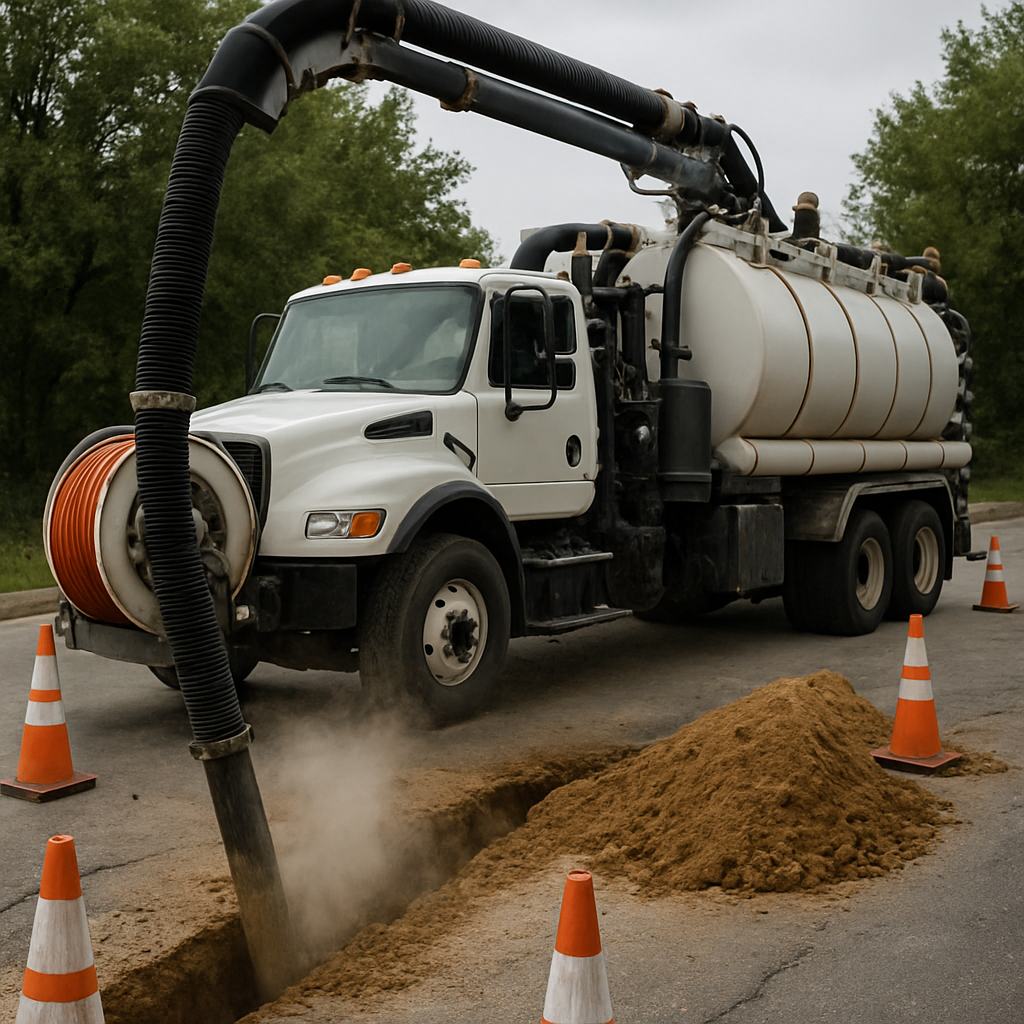
Hydro excavation digs with pressurised water and a powerful vacuum instead of a steel bucket. The water loosens the soil, the vacuum lifts it into a tank on the truck, and whatever’s buried down there stays safe and sound.
You’re not just paying for a hole. You’re paying for precision, safety, and peace of mind!
That’s the value at the heart of every quote.
What Affects the Cost of Hydro Excavation in Queensland?
Plenty of things shape the final number. Here are the big ones, explained simply.
Location within Queensland. A job in inner Brisbane sits differently to one out past Longreach. Regional and remote work often costs more, mostly because of travel.
Travel distance. The further the truck has to drive, the more you’ll pay for that time and fuel. A crew based close to your site is usually the cheaper option.
Site access. Can the truck park close to the dig? Narrow gates, steep driveways, and tricky backyards make the job slower, and slower means dearer.
Job size. One fence post is quick. A full pool dig is a much bigger effort. More digging equals more time and cost.
Depth. The deeper you go, the longer it takes and the more careful the crew has to be.
Soil type. Queensland ground varies a lot! Sandy coastal soil behaves differently to hard western clay or rocky patches. Tough ground takes longer to break up.
Weather. Our storm seasons and wet spells can slow a job or push it back. Water on site, mud, and access issues all play a part.
Service locating. If the crew needs to find and map underground utilities first, that’s an added step. It’s worth every cent, but it does affect the price.
Traffic control. Roadside or busy-area jobs may need traffic management and signage. That’s often a separate line on the quote.
Disposal needs. The slurry in the tank has to go somewhere. Disposal fees depend on the volume and the type of material.
Urgency. Need it done tomorrow? Rush jobs and after-hours work usually carry a premium.
Complexity around utilities. Digging near gas mains, high-voltage cables, or a tangle of services calls for extra care and time.
Every one of these nudges the price up or down. That’s why two “similar” jobs can land at different numbers.
| Cost factor | Why it affects the price | Potential impact |
|---|---|---|
| Location | Longer distances can increase travel time and fuel costs | Low to high |
| Travel distance | Truck and crew spend more time travelling | Low to high |
| Site access | Narrow, steep or restricted access can slow the work | Moderate to high |
| Job size | Larger excavation requires more time and resources | Moderate to high |
| Excavation depth | Deeper excavation generally takes longer | Moderate |
| Soil type | Hard clay, rock or difficult ground can slow excavation | Moderate to high |
| Weather | Wet conditions can affect access and productivity | Variable |
| Service locating | Additional locating and mapping may be required | Additional cost |
| Traffic control | Roadside work may require traffic management | Additional cost |
| Spoil disposal | Slurry/material must be managed and disposed of appropriately | Variable |
| Urgency | Rush and after-hours work may attract additional charges | Additional cost |
| Underground utilities | Complex utility environments require additional care and time | Moderate to high |
How Hydro Excavation Is Usually Quoted
Most Queensland providers quote one of two ways.
Hourly rates. You pay for the truck, the operator, and the time on site. This suits jobs where the scope isn’t fully clear yet, like exploratory potholing.
Project or fixed rates. You get one price for the whole job. This works well when the scope is well defined, like a set number of post holes or a known trench length.
Some crews mix both. They might quote a fixed price with clear conditions, plus extras if the job grows beyond what was agreed.
A quick word on precise numbers: real pricing depends on your specific job and provider, so be careful with any quote that gives a firm figure without seeing your site. The best quotes come after a proper look at the details.
Hydro Excavation Pricing Models
| Pricing method | How it works | Best suited to |
|---|---|---|
| Hourly rate | You pay for equipment, operator and time on site | Potholing, exploratory work and uncertain scopes |
| Fixed project price | One agreed price for a defined scope | Known excavation areas, post holes or trench lengths |
| Fixed price + extras | Base price with additional charges if agreed conditions change | Projects where some variables remain uncertain |
What’s Usually Included, and What Might Be Extra
Knowing this helps you compare quotes fairly!
Often included:
- The truck, water, and vacuum equipment
- A trained operator
- The digging itself
- Basic site clean-up
Sometimes extra:
- Service locating
- Traffic control and permits
- Disposal of spoil
- Travel to regional or remote sites
- After-hours or rush work
- Reinstatement (backfilling and tidying up)
A cheap headline rate can hide a stack of extras. A slightly higher rate that includes more can end up better value. Always compare what’s actually in the price, not just the number at the bottom.
Why Two Hydro Excavation Quotes Can Be Different
| Project factor | Job A | Job B |
|---|---|---|
| Location | Local | Regional/remote |
| Access | Easy truck access | Restricted access |
| Size | Small excavation | Large excavation |
| Depth | Shallow | Deep |
| Soil | Easy-to-excavate | Hard/rocky |
| Underground services | Few/known | Multiple/complex |
| Service locating | Not required or already completed | Required |
| Traffic control | Not required | Required |
| Disposal | Minimal | Significant |
| Urgency | Scheduled | Rush/after-hours |
A Brisbane Backyard Story
The following is a fictional example to show how pricing works in real life.
Meet Priya. She lives out Carindale way and she’s got two jobs on her list. First, a few fence posts along the side boundary. Second, a big dig for a new pool.
She’s surprised the two quotes look so different. But it makes sense once you break it down. The fence-post job is small, shallow, and quick, so it’s a modest hourly booking. The pool dig is deep, large, and sits near a water main and an NBN line, so it needs service locating, more hours, and careful work.
Same crew. Same suburb. Two very different jobs, two very different prices!
Priya budgets properly for each and there are no surprises. The pool project runs smoothly with zero strikes.
A Regional Civil Works Story
Another fictional example, this time on a bigger scale.
Now meet Cameron. He’s a project manager on a civil job near Rockhampton. His crew needs potholing across a work zone with power and comms running through it.
Cameron gets a couple of quotes. One’s noticeably cheaper. But when he digs into it, that low quote skips service locating and doesn’t include traffic control, both of which his site clearly needs.
He does the maths. A single utility strike would stop the job, trigger a safety investigation, and cost a fortune in repairs and downtime. The “cheap” option carries far more risk.
Cameron picks the crew with the complete, transparent quote. The job finishes on schedule, no strikes, no blowouts!
Why the Cheapest Dig Can Cost You the Most
Here’s the part plenty of people miss.
A bargain price means nothing if the job goes wrong. Hit a gas line, a power cable, or a water main and you’re looking at repair bills, fines, delays, and serious safety risks. Those costs dwarf the few dollars you saved up front.
False savings are the most expensive kind!
Hydro excavation actually saves money across the whole project when you look at the full picture:
- Fewer repairs. Precise digging means fewer strikes and fewer bills.
- Fewer delays. No utility strike means your timeline stays intact.
- Less reinstatement. Contained spoil and clean holes mean less mess to fix afterwards.
- Lower safety risk. Protecting people and property protects your budget too.
Spending a bit more on a safe, skilled crew is often the cheapest decision you’ll make.
What to Ask Before You Accept a Quote in Queensland
A few smart questions will save you headaches and money. Ask these before you sign anything!
- Is this an hourly or fixed price? Get clear on how you’ll be charged.
- What’s included in the quote? Locating, disposal, traffic control, travel, clean-up?
- What might cost extra, and why? Ask about likely add-ons before they appear.
- Do you include service locating? Confirm whether utilities will be found and mapped first.
- How do you handle travel to my area? Important for regional and remote sites.
- What happens if the job takes longer than expected? Understand how overruns are charged.
- Is disposal covered? Check who pays to remove the spoil.
- Do you have the right insurance? Make sure you’re protected if something goes wrong.
- Are your operators trained and experienced? Skilled crews work faster and safer.
- Can you assess the site before quoting? The most accurate quotes come after a proper look.
Get straight answers to these and you’ll know exactly what you’re paying for.
How to Budget the Smart Way
Start with a clear scope. The more detail you give a provider, such as job size, depth, access, and location, the more accurate your quote will be.
Get more than one quote. Compare what’s included, not just the price.
Build in a little buffer for the unexpected, especially with weather and tricky ground here in Queensland.
And weigh the full cost, not just the dig. Safety and precision protect your wallet down the track.
How to Reduce Hydro Excavation Costs
| Action | How it can help control costs |
|---|---|
| Provide accurate site information | Helps the contractor estimate the scope |
| Confirm service locations | Reduces uncertainty before excavation |
| Provide clear access | Makes truck positioning easier |
| Define excavation points | Helps establish the required scope |
| Book in advance | Avoids unnecessary rush charges |
| Ask about disposal upfront | Prevents unexpected disposal costs |
| Compare complete quotes | Avoids choosing a low headline rate with many extras |
| Group excavation work | May reduce repeated mobilisation |
| Confirm site requirements | Helps identify traffic control and other extras early |
The Bottom Line
The cost of hydro excavation in Queensland comes down to your job, your site, and your location. Distance, depth, soil, access, locating, disposal, and complexity all play a part. That’s why a good quote starts with understanding your project.
Cheap and risky is a false economy. Safe, precise, and clearly priced is the smart choice every time!
At H2Flow, we’re a local Queensland team that keeps pricing clear and honest. We’re happy to look at your job, explain what’s included, and give you a straightforward quote with no surprises. No pressure, just practical advice from people who know the ground beneath your feet.
When you’re ready for a clear price, get in touch and we’ll talk it through!


Leave a Reply