
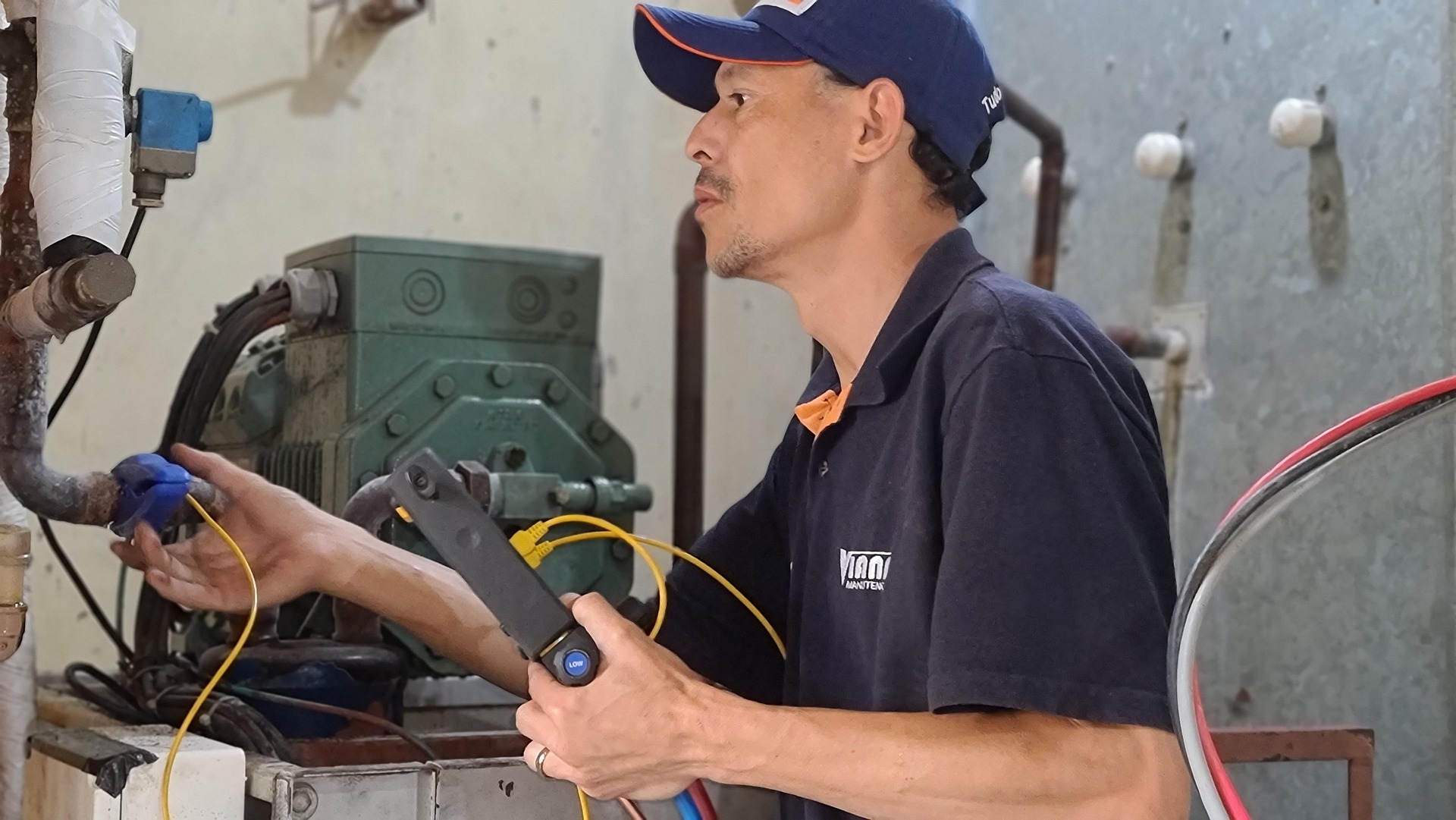
Why Industrial HVAC Installation in Toowoomba Requires Local Expertise
Industrial HVAC installation in Toowoomba demands more than general technical competence. The region’s distinct climate zone classification, elevated topography, and Queensland-specific regulatory framework create conditions that generalist contractors are poorly equipped to address. Facilities operating without locally experienced HVAC professionals risk non-compliant installations, reduced system efficiency, and extended response times during critical maintenance windows.
This listicle outlines the five core reasons why local expertise is not optional — it is a baseline requirement for any industrial HVAC project in the Toowoomba and Darling Downs region.
1. Toowoomba’s Climate Zone Creates Unique Thermal Design Requirements
Toowoomba sits within NCC Climate Zone 5 — classified as warm temperate — which distinguishes it sharply from the subtropical coastal plains to the east.
This classification requires HVAC systems to address both significant heating and cooling loads across the calendar year. That dual demand affects:
- Equipment sizing — systems must handle temperature extremes in both directions without over-engineering for a single season
- Thermal envelope calculations — insulation specifications and air sealing requirements differ from those applicable in Zone 2 (subtropical) areas
- Seasonal load profiling — industrial facilities must account for winter heating demands that coastal Queensland operators rarely encounter
The Toowoomba Region’s warm temperate classification is well-documented by the Australian Building Codes Board (ABCB) Queensland Climate Zone Map and supported by research from the University of Queensland and QUT. Contractors unfamiliar with Zone 5 design criteria frequently import coastal assumptions — leading to undersized heating capacity or miscalibrated control strategies.
Local engineers understand Zone 5 by default. They design to it from the first load calculation, not as an afterthought.
2. Altitude and Topography Directly Affect HVAC System Performance
Toowoomba sits at approximately 700 metres above sea level on the Great Dividing Range. At this elevation, air density decreases measurably. That reduction has direct consequences for industrial HVAC performance.
The key effects include:
- Reduced air mass flow — thinner air means each cubic metre of airflow carries less thermal energy, affecting heating and cooling output
- Combustion inefficiency — gas-fired heating equipment requires recalibration to account for reduced oxygen availability at altitude
- Fan and blower performance — variable air volume (VAV) systems and supply fans must be selected and commissioned with altitude-adjusted performance curves
- Refrigerant behaviour — lower ambient air density affects heat rejection in air-cooled condensers, influencing efficiency ratings
These are not theoretical concerns. HVAC engineers experienced in high-altitude or elevated terrain environments — including those working regularly across the Darling Downs — apply altitude correction factors during equipment selection. Contractors sourcing equipment to sea-level performance specifications and installing it at 700 metres will deliver systems that underperform against design intent.
Furthermore, Toowoomba’s position on the escarpment produces localised wind patterns and temperature inversions that influence outdoor air intake design and exhaust placement for industrial facilities. This topographic knowledge is not transferable from coastal or lowland experience — it accumulates through repeated local project delivery.
3. Compliance With Australian Standards and Queensland Regulations Requires Specific Local Knowledge
Industrial HVAC installations in Queensland must satisfy a layered compliance framework. Non-compliance exposes facility owners to enforcement action, failed inspections, and voided equipment warranties.
Applicable standards and regulations include:
- AS 1668.2:2024 — mechanical ventilation requirements for buildings, recently updated to provide revised minimum outdoor air rates and system performance criteria
- AS/NZS 3666 — air-handling and water systems maintenance, including hygiene and microbial contamination control requirements applicable to industrial cooling towers and air-handling units
- NCC Section J (Part J6) — energy efficiency provisions for air-conditioning and ventilation equipment, with climate zone-specific performance requirements that directly apply to Zone 5 facilities in Toowoomba
- QBCC licensing requirements — contractors performing mechanical services work in Queensland, including air-conditioning and refrigeration, must hold a valid Queensland Building and Construction Commission (QBCC) licence in the relevant class
Additionally, Queensland’s National Construction Code climate zone designations affect the minimum energy performance standards that HVAC equipment must meet for new installations and significant refurbishments.
Local contractors operating continuously in the Queensland market maintain current awareness of:
- QBCC licence obligations and continuing professional development requirements
- Updates to AS 1668 and AS/NZS 3666 that affect system design and maintenance schedules
- Local council and building certifier interpretations of NCC provisions specific to the Toowoomba Regional Council area
Contractors based interstate or in coastal Queensland may hold relevant qualifications but lack the operational familiarity with local compliance pathways — including relationships with certifiers and inspectors — that translate directly into faster approvals and fewer compliance delays.
4. Local Response Times Are Critical for Industrial HVAC Maintenance
Industrial facilities in Toowoomba — including manufacturing plants, cold storage operations, processing facilities, and large commercial buildings — operate on production schedules where HVAC downtime carries measurable financial cost.
The logistical advantage of local expertise is direct:
- Faster emergency response — local contractors can mobilise technicians to site within hours, not days. Facilities relying on Brisbane-based or interstate providers routinely absorb 24–48 hour response lags for non-critical faults, which can escalate into critical failures
- Reduced travel costs — call-out fees and travel time charges accumulate significantly when service providers operate from outside the region. Local contractors price their services without long-distance travel cost premiums
- Planned maintenance scheduling — local providers can offer tighter preventive maintenance windows that align with production downtime, rather than scheduling around their own regional travel routes
- Parts and supplier access — established local contractors maintain relationships with Toowoomba-based or regional suppliers. This reduces lead times on replacement components compared to contractors relying on metropolitan supply chains
- Site familiarity — technicians who service the same facility repeatedly accumulate system-specific knowledge. This institutional familiarity reduces diagnostic time and improves first-visit resolution rates
For industrial operators, the economics of local service provision are straightforward. A single avoided unplanned shutdown event will typically exceed the cost differential between a local contractor and a lower-quoted non-local alternative across a full service contract term.
5. Regional Project Experience Informs Better Industrial System Design
Industrial HVAC in Toowoomba serves a specific economic base — including agribusiness processing, manufacturing, logistics, and health infrastructure. Each sector carries distinct internal load profiles, contamination control requirements, and operational constraints.
Local contractors bring accumulated project experience across:
- Refrigerated storage and cold chain facilities — common in the region’s agribusiness sector, requiring precise temperature control and redundancy planning
- Processing environments — high internal moisture loads, contaminant management, and wash-down compatible equipment selection
- Multi-zone industrial buildings — large floor plates with varied occupancy and process loads requiring zoned control strategies
- Heritage and constrained sites — older industrial buildings in the Toowoomba CBD and surrounds that require equipment integration within existing structural and spatial constraints
This sector-specific regional knowledge shapes design decisions from system architecture through to equipment selection and controls strategy. It is not replicated by general commercial HVAC experience, regardless of the contractor’s national scale.
Frequently Asked Questions
What qualifications should an industrial HVAC contractor in Toowoomba hold?
Industrial HVAC contractors operating in Queensland must hold a current QBCC mechanical services licence — specifically the air-conditioning and refrigeration licence class relevant to the scope of work. For industrial-scale systems, contractors should additionally demonstrate experience with AS 1668.2 compliance, NCC Section J energy efficiency provisions, and AS/NZS 3666 maintenance requirements. Verification of QBCC licence status is available directly through the QBCC public register.
How does Toowoomba’s climate zone affect HVAC installation costs?
Zone 5 classification requires HVAC systems to be designed for both heating and cooling loads — a dual requirement that increases system complexity compared to cooling-dominant coastal applications. Equipment with higher heating capacity ratings, additional controls integration, and zone-specific energy modelling are standard inclusions. These factors increase upfront capital cost but reduce long-term operating costs through right-sized equipment and compliant energy performance. Facilities that install undersized or incorrectly specified systems incur higher energy consumption and accelerated equipment wear.
How often should industrial HVAC systems in Toowoomba be serviced?
AS/NZS 3666 establishes minimum inspection and maintenance intervals for air-handling systems, water systems, and cooling towers. For industrial facilities, quarterly preventive maintenance inspections are generally the minimum baseline. Systems operating in high-contamination environments — such as food processing or chemical handling — may require more frequent service intervals. Annual full-system compliance audits, including airflow measurement and microbial testing where applicable, are standard practice for facilities subject to NCC and AS/NZS 3666 obligations.
What are the main risks of using a non-local contractor for industrial HVAC in Toowoomba?
The primary risks include: installation to incorrect climate zone specifications, non-compliance with QBCC licensing requirements, delayed emergency response during system failures, and equipment selection that fails to account for altitude performance derating. Additionally, non-local contractors may lack familiarity with Toowoomba Regional Council building approval processes, increasing the risk of certification delays. Collectively, these risks translate into higher total cost of ownership and potential regulatory exposure for facility operators.
Does altitude affect HVAC equipment warranties in the Toowoomba region?
Many equipment manufacturers specify altitude correction requirements within their installation documentation. Systems installed above defined elevation thresholds — typically 300 to 600 metres, depending on the manufacturer — may require explicit altitude derating factors to be applied during commissioning. Failure to apply these corrections can result in voided warranties if the equipment fails to meet rated performance. Local contractors familiar with the Toowoomba region’s elevation apply these corrections as standard practice, whereas contractors without regional experience may overlook this requirement entirely.
How long does a typical industrial HVAC installation take in Toowoomba?
Project duration varies considerably based on facility size, system complexity, and whether the installation is new construction or a retrofit into an existing building. For mid-scale industrial facilities, installation timelines of six to twelve weeks are common, excluding design and approval phases. Council building approval for mechanical services work in the Toowoomba Regional Council area typically requires four to eight weeks, depending on application completeness. Local contractors with established relationships with local certifiers and council building departments can often reduce approval timelines through familiarity with submission requirements.
Industrial HVAC installation in Toowoomba demands technical competence, regulatory awareness, and regional familiarity in equal measure. The combination of Climate Zone 5 thermal design requirements, altitude-driven performance considerations, Queensland-specific compliance obligations, and the logistical realities of industrial maintenance makes local expertise the most reliable foundation for any installation project in the region. Facility managers and project decision-makers should prioritise contractors with demonstrable local experience, current QBCC licensing, and a service presence within the Toowoomba and Darling Downs region.


Leave a Reply